
Amazigh Carpets as Material Knowledge
A textile can be read in several ways
We can examine its materials, construction, colours and patterns. We can consider how it was made, how it has been used and how it has moved between people and places. We can also ask what knowledge is associated with its making and interpretation.
My research into Amazigh carpets in Morocco begins with this understanding of the textile as more than a decorative object.
Woven forms offer a rich field for investigating the relationship between material practice and visual communication. Patterns emerge through decisions about thread, colour, structure, repetition and placement. Their appearance is inseparable from the processes through which the textile is produced.
Yet visual analysis alone is not enough.
A motif may invite interpretation, but its appearance does not automatically reveal what it means to the people who make, use or inherit the textile. Meanings can vary between makers, communities, generations and contexts. They may also change over time.
This distinction matters when researching cultural heritage.
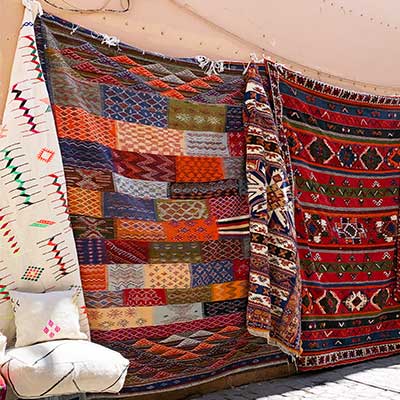
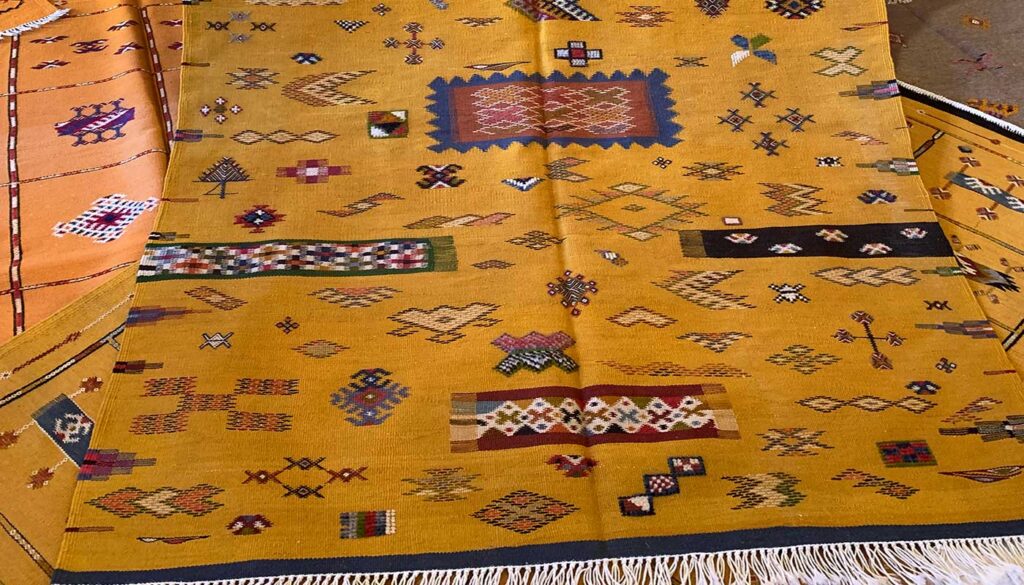
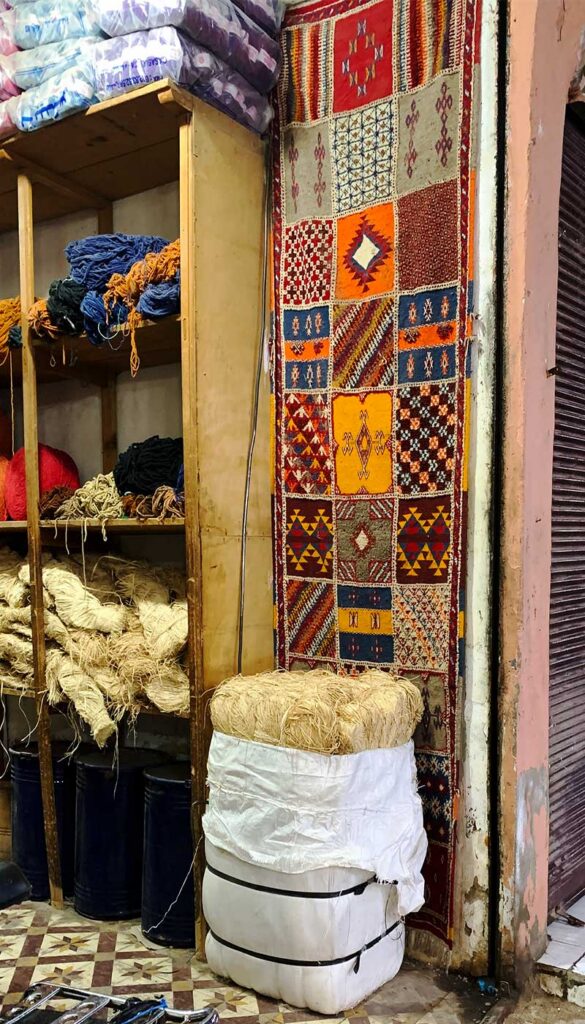
It is tempting to treat a collection of motifs as a fixed visual vocabulary, with each shape corresponding to a single, universally applicable meaning. Such an approach can make complex cultural practices appear simpler and more stable than they are.
Instead, I am interested in the relationship between visible form and transmitted knowledge.
What can close observation tell us about a textile’s structure? What additional understanding might emerge through knowledge of its production, use and cultural context? How can documentation preserve these relationships rather than separating the pattern from the people and practices that give it significance?
The idea of a woven archive offers one way to approach these questions.
An archive usually brings to mind documents, photographs and written records. A textile suggests a different kind of record: one shaped by material, technique, repetition and use. It may preserve evidence of making while also pointing towards forms of knowledge that cannot be recovered from the object alone.
The archive is therefore both material and relational.
A photograph can document a motif. A detailed image can reveal a change in colour or structure. A record of the textile’s provenance can establish important contextual information. Accounts from knowledgeable makers, where available and shared with permission, can add further dimensions to its interpretation.
These forms of documentation should complement one another.
My research asks how visual analysis can contribute to the documentation of Amazigh textile heritage while recognising the limits of what an image can tell us.
The objective is not to assign definitive meanings to every pattern. It is to develop a more careful way of observing, recording and interpreting the relationship between woven form, material practice and cultural knowledge.
A textile can be an archive of making, but understanding what it holds requires attention to more than the threads alone.

