
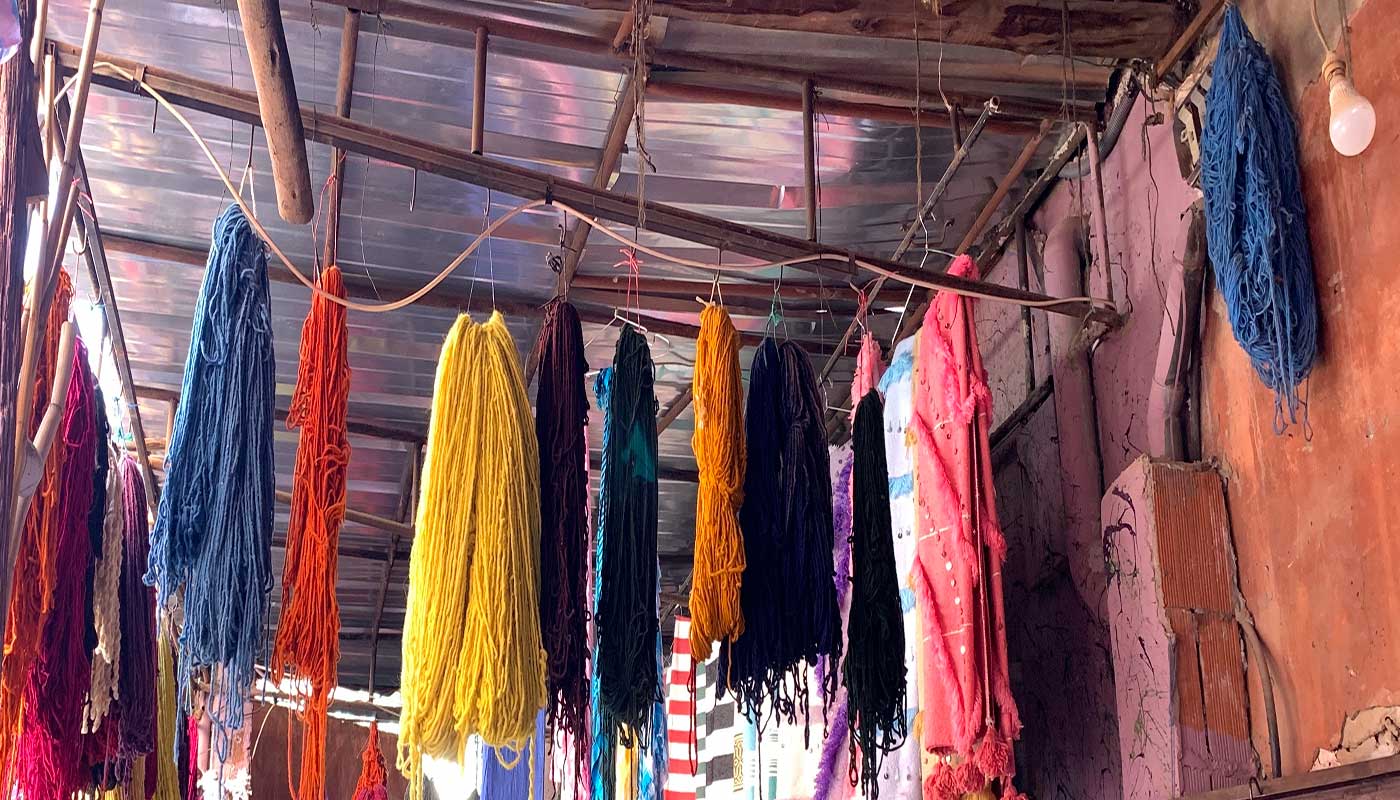
The body can become a surface upon which identity, experience and cultural meaning are expressed.
Across different societies and historical periods, the body has been marked, adorned and transformed through practices that communicate belonging, status, belief, beauty and personal experience. These practices cannot be understood simply by examining the visible mark. Their meanings depend on the cultural and social contexts in which they occur.
My interest in Amazigh visual culture has led me to consider the relationship between bodily inscription, textile pattern and other forms of material expression.
This is a comparative research question rather than an assumption that these practices share a single symbolic system.
A woven motif and a bodily mark may both invite questions about visual language, memory and cultural transmission. However, their materials, purposes, histories and relationships to the body are different. Those differences must remain central to the analysis.
What interests me is the broader question of how visual knowledge is carried and communicated.
A textile can be handled, inherited, repaired or displayed. A mark on the body exists within a different set of relationships, involving the person who bears it, the circumstances of its creation and the cultural knowledge associated with the practice.
In both cases, the visible form may be only one part of a much larger system of meaning.
Documentation introduces further questions.
When a researcher photographs a person or records information about a cultural practice, what is being preserved? Who controls the resulting image? How is the subject represented, and what happens when the image is circulated beyond its original context?
These questions are particularly important when working with communities whose histories have been interpreted through external records, colonial classifications or incomplete visual archives.
A photograph can preserve a visual detail while stripping it of the relationships that made it meaningful. A caption can clarify context, but it can also impose an interpretation that the image itself does not justify.
Responsible documentation therefore requires more than technical accuracy.
It requires attention to consent, context, terminology, attribution and the authority to interpret the material. It also requires recognising that not all knowledge is intended for unrestricted circulation.
My interest in the body as a surface of memory is connected to this wider concern with how knowledge becomes visible, how it is transmitted and how it can be misrepresented.
The body is not simply another object to be photographed. It belongs to a person, a history and a set of relationships that the researcher must approach with care.
To document a mark responsibly, we must consider not only what it looks like, but also whose knowledge it carries, who has the authority to interpret it and how that interpretation will be used.

