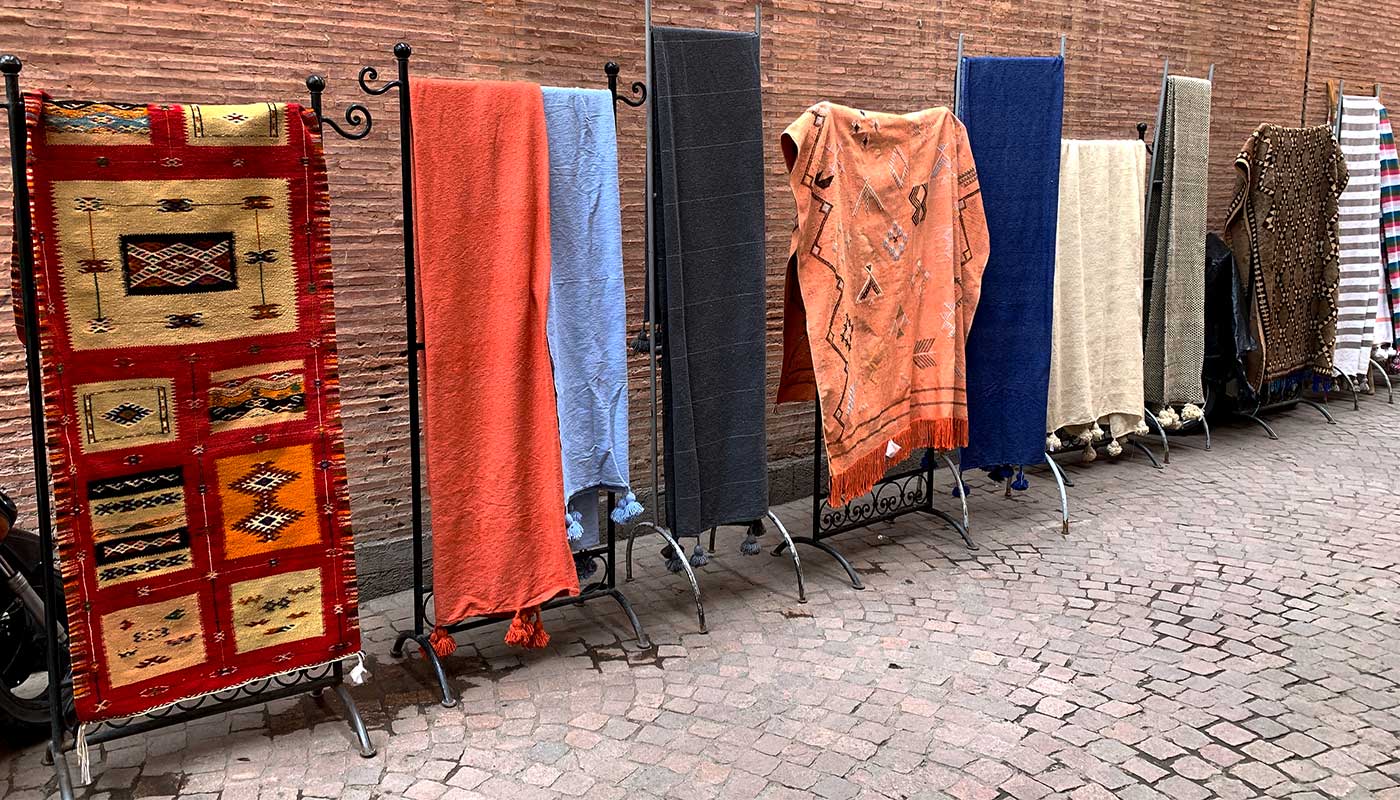
Fieldwork begins with looking, but looking is never entirely separate from the questions we bring with us. My research in Morocco has focused on the relationship between place, material culture, and visual knowledge. I am particularly interested in Amazigh cultural traditions and the ways in which identity, knowledge and memory become visible in the material and visual environments people inhabit. In Morocco, I have photographed different forms of visual expression, from woven textile patterns to street names and signs that incorporate the Amazigh language. Although these subjects differ in their materials, purposes and contexts, they have prompted related questions about how culture is represented, encountered and communicated through visual forms.
What can we learn by paying attention to the details through which a place makes itself visible?
Language in the Streets of Agadir
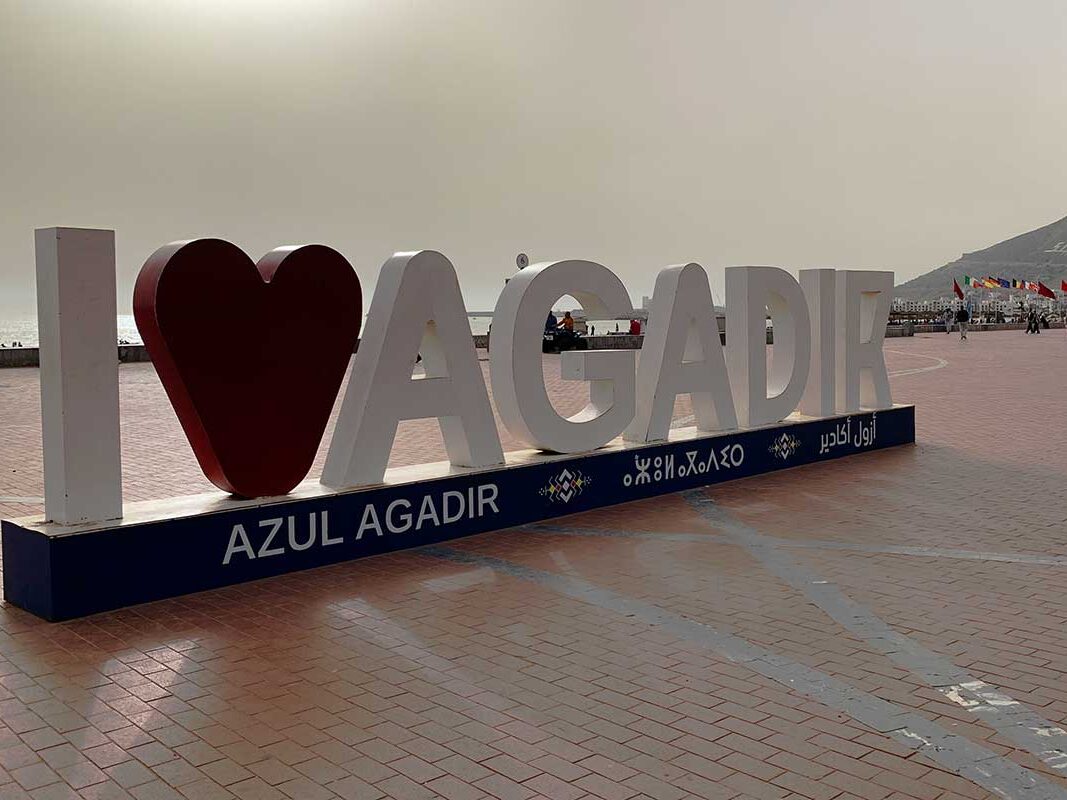
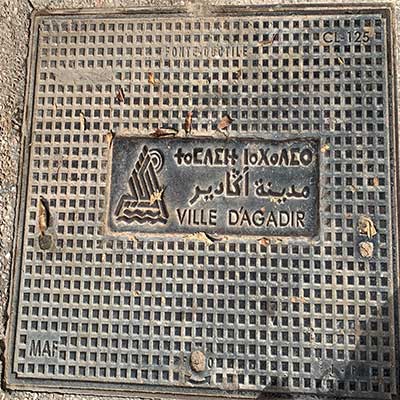
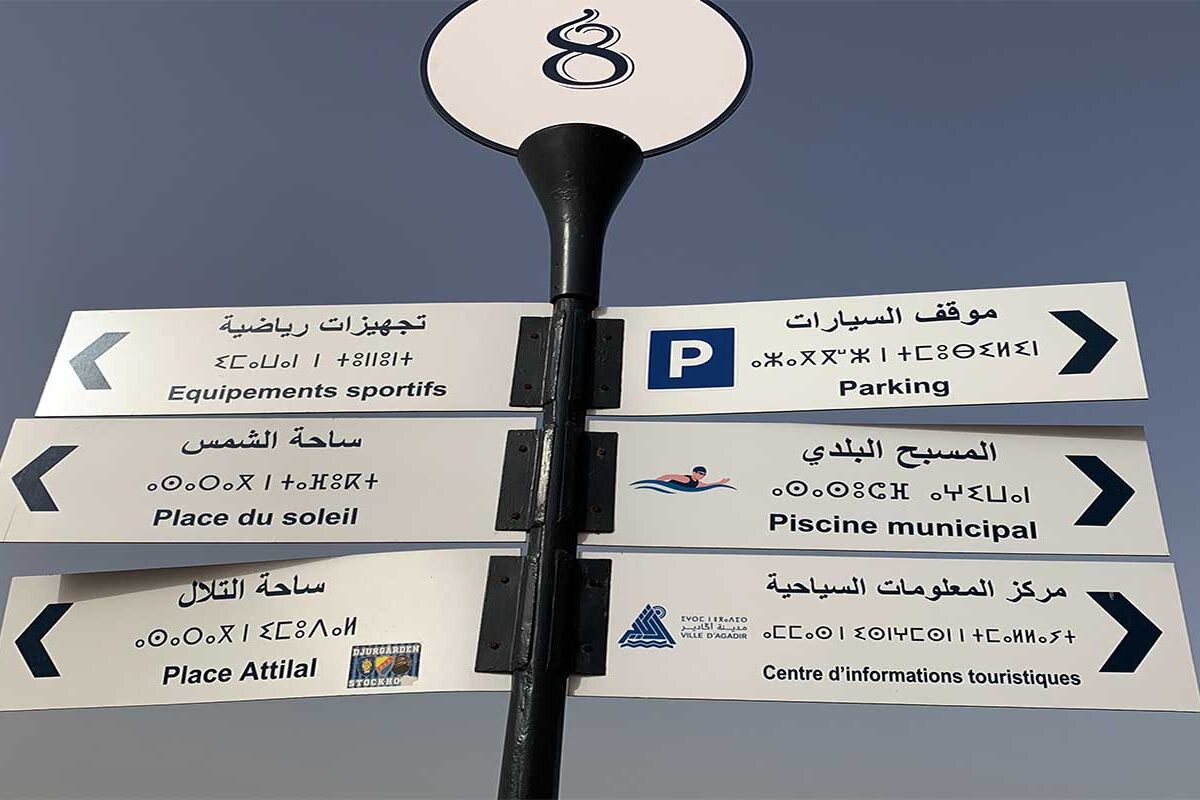
During my time in Agadir, I photographed street names and other signage that included the Amazigh language. These encounters drew my attention to the relationship between language, public space and visual communication. A street sign is a functional object. It identifies a location, assists navigation and communicates information to people moving through a city. Yet it is also part of the visual environment through which a place presents itself.The languages used on signs, their scripts and their positioning within public space can raise questions about visibility, recognition and the communication of cultural identity. They invite us to consider how language becomes part of the everyday experience of a city, rather than remaining confined to books, formal documents or private conversation.
Photographing these signs offered me a way to record this aspect of Agadir’s visual environment. The camera allowed me to preserve particular examples of written language in their surroundings and to return to the images for closer examination. However, the photographs themselves cannot explain the full history or significance of what they show. Understanding the official status, local use and cultural meanings of a language requires contextual research beyond visual observation. For this reason, I approach these photographs as records of encounters and starting points for further questions, rather than as complete explanations of Amazigh linguistic identity.
The distinction matters. A photograph can document the visible presence of a language, but interpreting what that presence means requires attention to its historical, social and political context.
Reading Material Culture Through Place
My interest in the visual environment of Agadir connects with my research into Amazigh textile traditions, particularly the woven carpets of the Taznakht region.

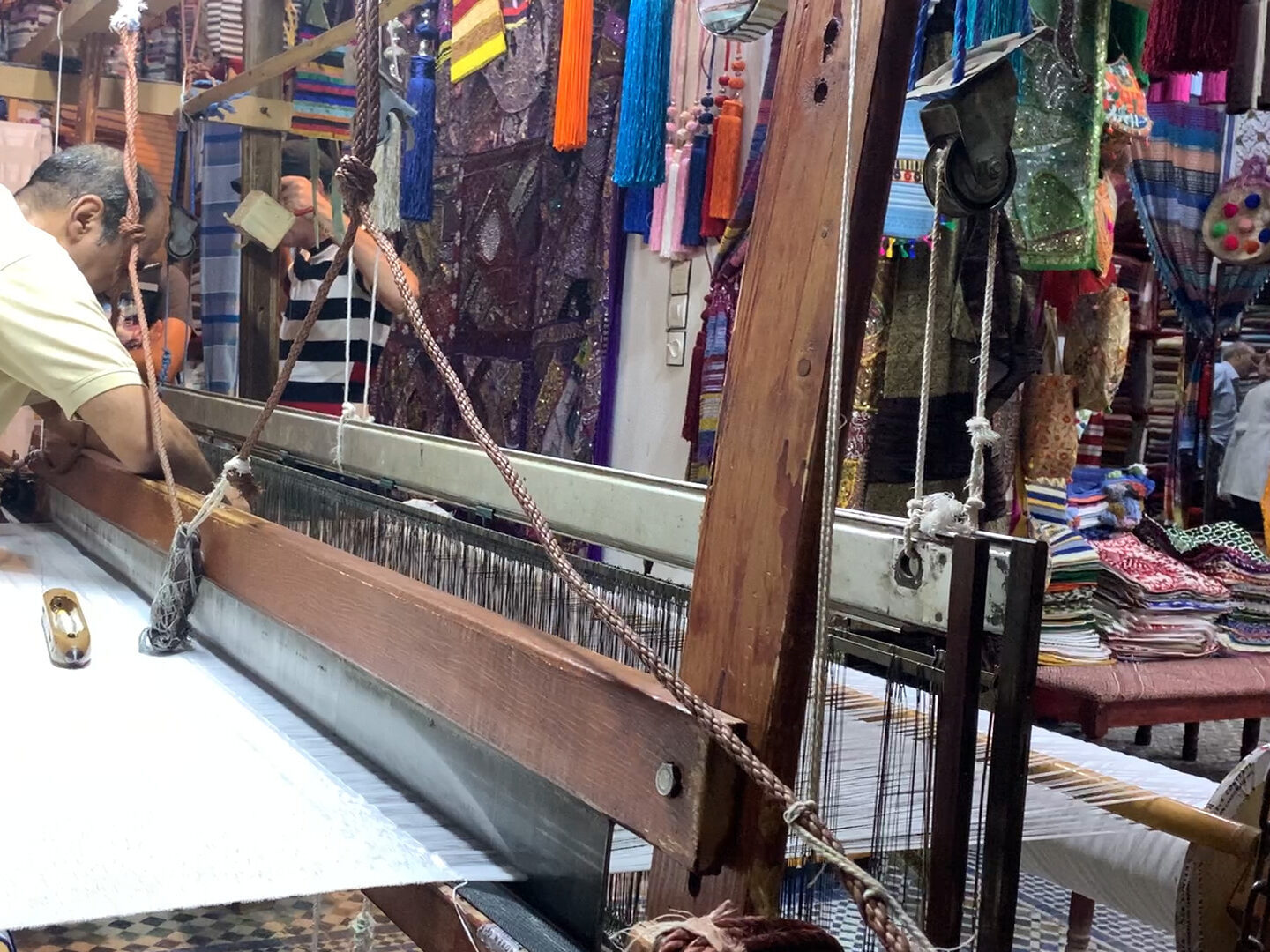
My interest in the visual environment of Agadir connects with my research into Amazigh textile traditions, particularly the woven carpets of the Taznakht region. A textile does not emerge independently of its surroundings. Materials must be sourced, techniques learned and objects made, used or exchanged within particular circumstances. Knowledge develops through practice and may be shared between generations, adapted to changing conditions or retained by particular individuals and communities.
The finished object is therefore only one part of a much larger system of relationships.
A carpet can be photographed for its colour, pattern and construction, but understanding its place within a living tradition requires more than visual appreciation. Questions about materials, making, use and the transmission of knowledge help situate the object within its cultural context. The same principle informs my interest in street signage. A sign can be photographed as a graphic composition, but its significance extends beyond typography, shape or colour. It belongs to a particular linguistic and social environment. These subjects are not interchangeable, and I do not assume that a woven pattern and a written script communicate meaning in the same way. Rather, they offer different opportunities to investigate how visual forms operate within particular cultural settings. In both cases, the challenge is to move beyond the immediately visible without claiming more than the available evidence supports.
Photography as a Method of Observation
Photography provides an important means of recording these encounters. It allows me to document details, examine visual relationships and return to images after the fieldwork encounter has ended. A wide photograph may establish the setting of an observation. A closer image can record a material detail, while a sequence of photographs may reveal relationships that a single image cannot communicate.
When photographing street signage, for example, the written form is important, but so is its physical setting. The relationship between the sign and the surrounding street can provide information that would be lost if the sign were photographed in isolation. Similarly, when documenting a textile, a photograph of the complete object serves a different purpose from a close-up of its weave, colour relationships or construction. The challenge is to decide what needs to be recorded and why.
It is easy to become absorbed in the visual appeal of a subject, particularly when working with colour, pattern and intricate detail. Yet an aesthetically compelling photograph is not necessarily the most useful research document. A research photograph must be considered in relation to the question it is intended to support. Does it show the whole object or sign? Is the detail clear enough to examine? Is the location known? What contextual information is needed to prevent the image from being misinterpreted? Are there limitations to what can reasonably be concluded from the photograph?
These questions influence the way I approach field photography.
Looking Beyond the Image
Fieldwork also reminds me that documentation involves relationships beyond the camera. A photograph records what was visible from a particular position at a particular moment. It does not automatically reveal the intentions of a maker, the history of an object, the experience of a language community or the meanings attributed to a place by those who live there. Where knowledge is shared by practitioners or community members, their contributions must be acknowledged and represented appropriately. Recording and publication should respect consent, permissions and any restrictions on the use of cultural knowledge.
Written records, published scholarship, contextual information and knowledge shared by practitioners can help establish relationships that visual observation alone cannot confirm. This is particularly important when documenting cultural heritage. There is a difference between observing a visual form, interpreting its possible significance and establishing a claim about its meaning. Keeping these stages distinct helps make research more transparent and responsible. The photographs I made in Morocco form part of an ongoing process of observation. They record encounters with a visual environment in which language, material culture and place invite further investigation.
Learning to Observe Place
My interest is not simply to collect images of Morocco. It is to understand how photography can contribute to a more careful investigation of cultural and material environments. The street names and signs I photographed in Agadir have encouraged me to consider how language becomes visible in public space. My research into Taznakht carpets raises related questions about how material forms can be documented and understood within the contexts in which they are made and used. Together, these encounters reinforce an important principle in my practice: visual documentation is the beginning of a research process, not its conclusion. Each photograph preserves a fragment of an encounter. Its value depends partly on what it enables us to observe, but also on the questions it generates and the care with which it is interpreted.
Fieldwork is not simply the act of being somewhere and photographing what is visible. It is a process of learning how to observe, what to record and how to remain accountable to the knowledge and contexts that give a place its significance.

